

At Probance, we offer 11 ready-to-use, personalized marketing scenarios tailored to your business. Each model is adapted to the specific features and style of your website, and fine-tuned according to the trigger and objective of each scenario.
Each scenario contains predefined campaigns that are fully configurable according to your uses and needs, and can be enhanced by adding additional campaigns, reminders, etc.
Below, we explain the key characteristics of each scenario and share best practices for designing them, so you can achieve the best possible performance — whether it’s increasing conversion rates and revenue, strengthening customer relationships, acquiring new clients, or building loyalty effortlessly.
Scenarios designed to increase conversion rates and revenue
POST VISIT
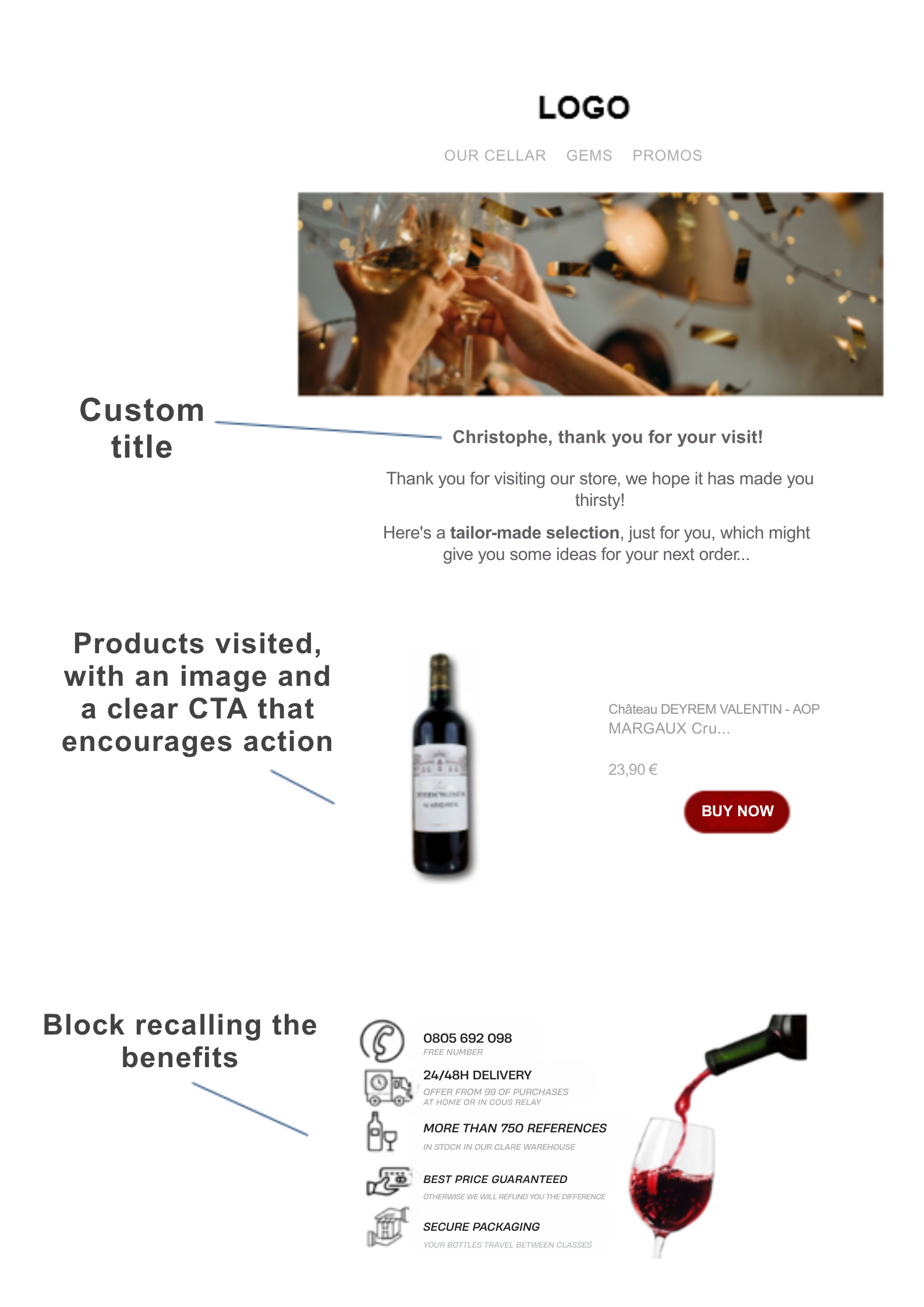
The goal of this scenario is to detect when a customer shows interest in specific products or categories. This scenario is triggered after the customer visits the website.
Its two campaigns are created to convert our customer’s visit to the website into a purchase. To do this, both campaigns automatically show the products the customer visited on the site, along with a selection of products from the same main or secondary category that they may also be of interested in.
The two post-visit campaigns are sent at two different moments: Post Visit 1 the day after the customer visits the website and Post Visit 2, four days after the visit. However, the second one, will not be sent if the customer makes a purchase after receiving the first campaign.
Best Practices:
- Personalize the content by showing the products viewed, along with a selection tailored to the user’s behavior and profile, demonstrating genuine interest in their needs.
- Offer an exclusive deal to encourage purchase
- Highlight an additional benefit, such as free shipping or responsive customer service.
- Create a sense of urgency by mentioning, for example, the limited availability of the product.
ABANDONED CART
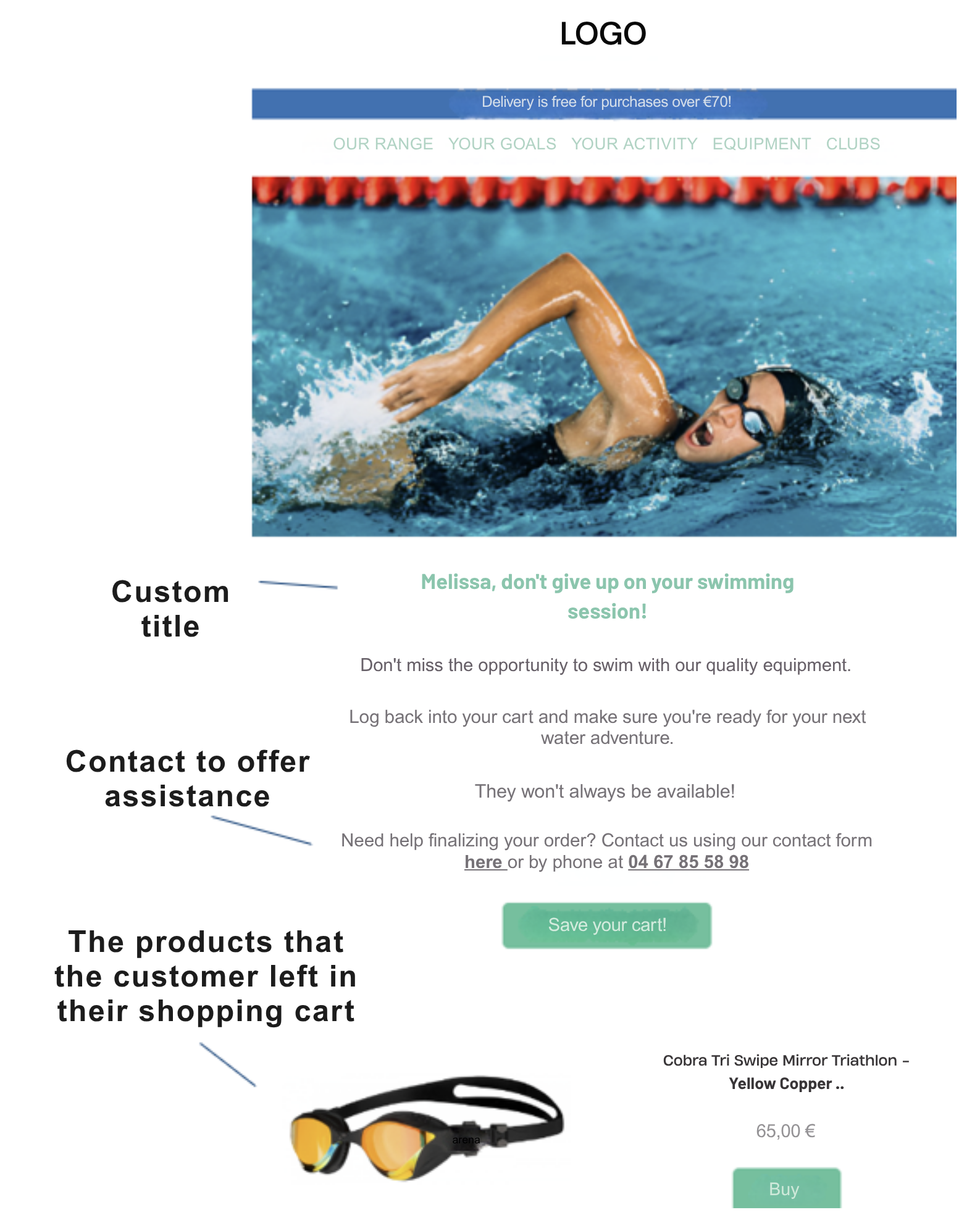
The Abandoned Cart scenario is aimed at customers who have started the purchase process on the website but have not completed it. It is triggered when a customer adds one or more products to their basket without finalizing the purchase and consists of four campaigns:
- Abandoned Cart 1 is sent two hours after the basket is created.
- Abandoned Cart 2 is sent the day after the basket is created.
- Abandoned Cart 3 is sent two days after the basket is created.
- Abandoned Cart 4 is sent six days after the basket is created.
Through the four campaigns, we aim to eliminate any obstacles the customer may have had in completing their purchase and encourage them to finalize it.
To achieve this, the products they viewed are automatically sent to them, along with a selection of items from the same main or secondary category that may also be of interest. In addition, promotional codes can be included to encourage them to complete their order.
Best Practices:
- Personalize the content by using custom tags such as the user’s name or one of the products in their cart, along with a selection of items tailored to their behavior.
- Reinforce the sense of urgency by highlighting the limited availability of the products in their cart.
- Offer support by making it easy to contact customer service, who can answer any questions the user may have.
- Include a compelling call-to-action with a direct link to the abandoned cart.
CROSS SELL
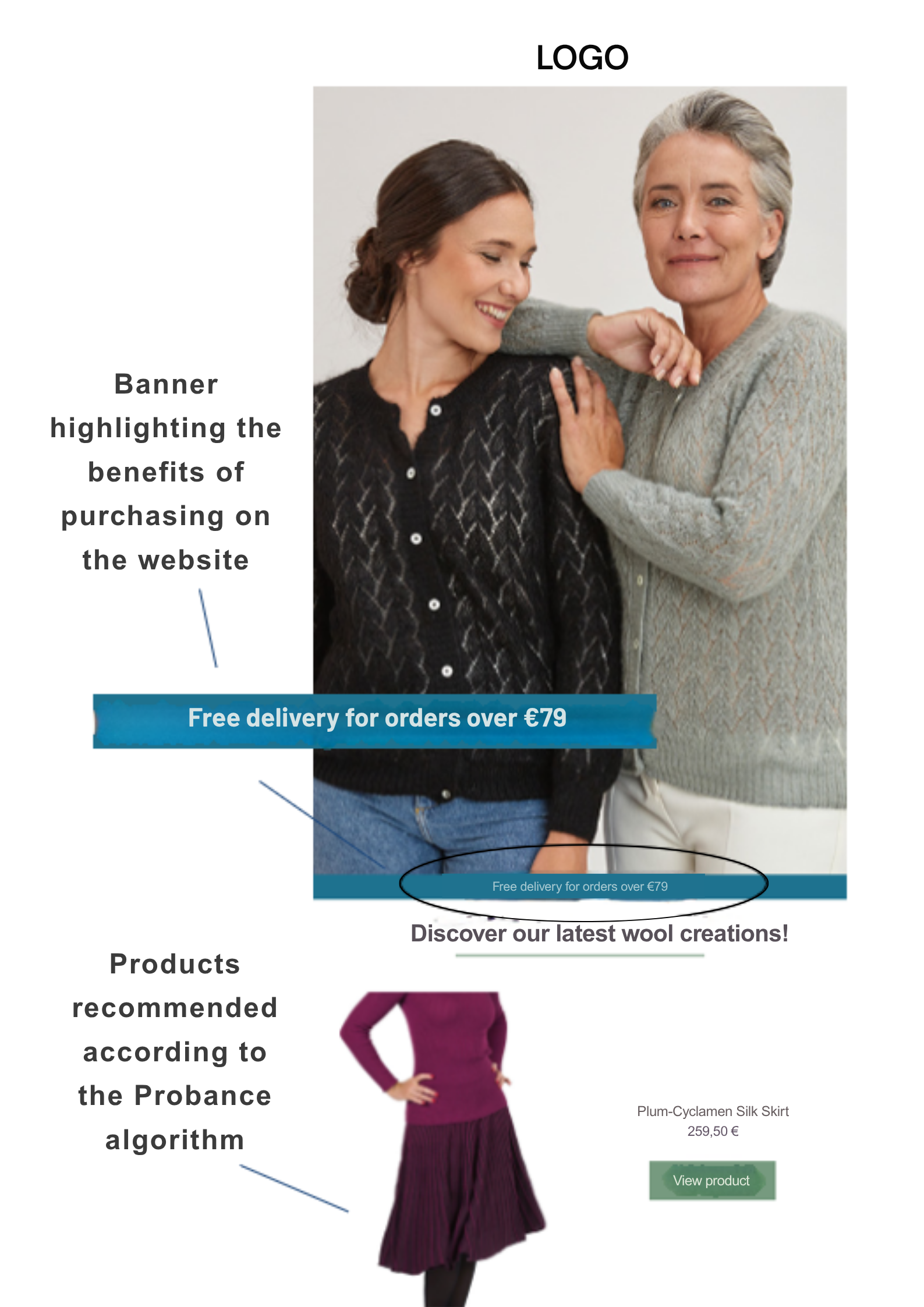
This scenario targets customers who have already made a purchase on the website, with the goal of increasing the likelihood of them making further purchases on the website, being triggered after a purchase. Two campaigns are sent, Cross Sell 1, 30 days after the order and Cross Sell 2, 90 days after the order.
This scenario allows you to fuel customer interest and encourage new purchasing behaviour by offering them relevant product selections based on their latest orders through two automated campaigns.
Best Practices:
- Use eye-catching visuals to grab attention right from the start.
- Take the opportunity to thank your customers for their purchase and strengthen your relationship with them.
- Include testimonials and customer reviews to build trust.
RE-SELL
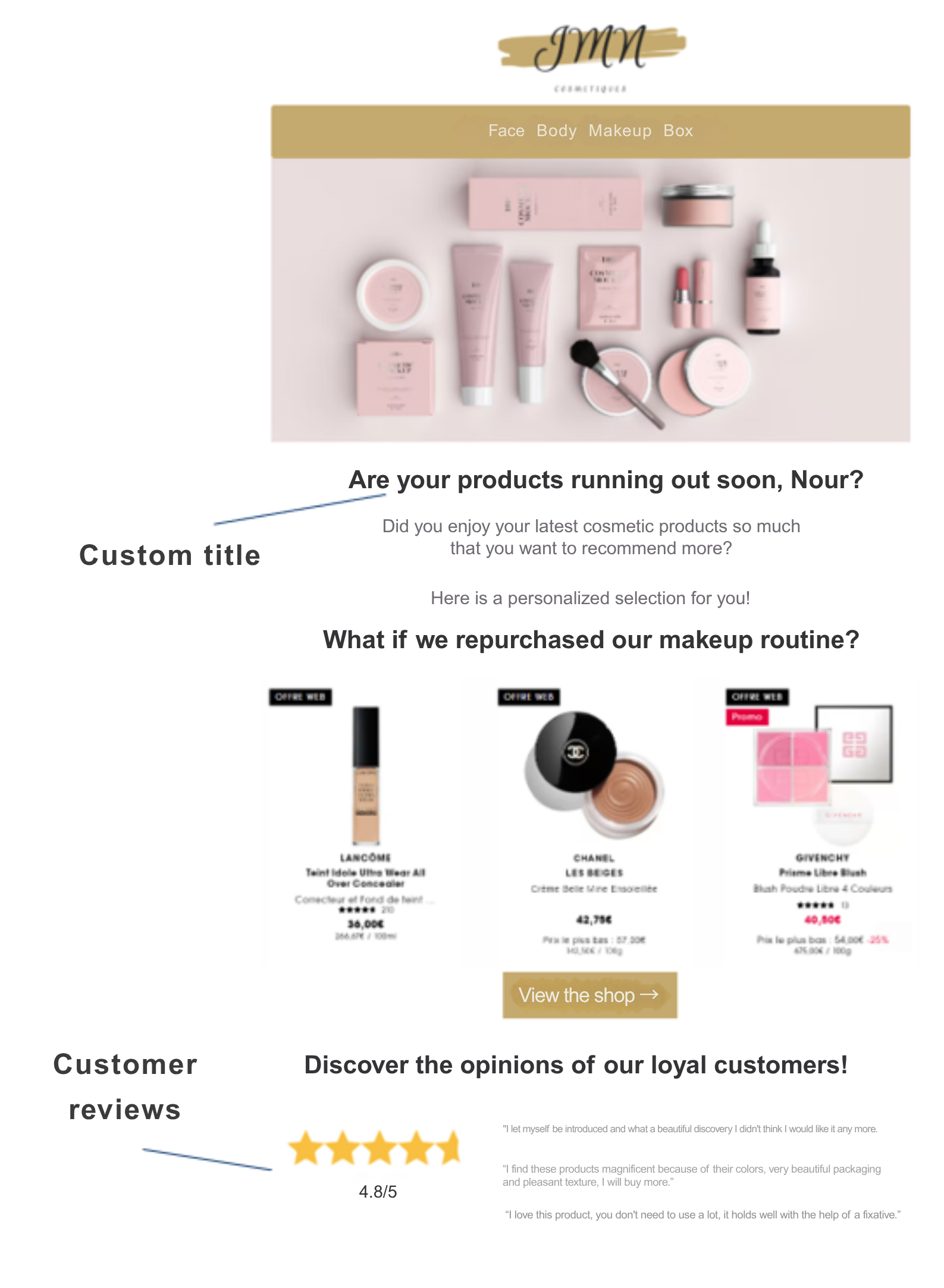
This scenario targets customers who have already made a purchase, and aims to shorten the time until the next purchase by automatically offering them the products they previously purchased. Two campaigns are sent, Re-Sell 1, 20 days after the order and Re-Sell 2, 180 days after the order.
This scenario is especially important for the sale of consumable products.
Probance’s algorithm can calculate the purchase intervals for each product type, allowing the system to send each customer the products they previously bought at the exact time they are likely to need to reorder them.
Best Practices:
- In addition to previously purchased products, offer personalized recommendations based on them.
- This is a good opportunity to ask your customers to leave a review or share their opinion about their shopping experience.
Scenarios aimed at strengthening customer relationships
ANNIVERSARY
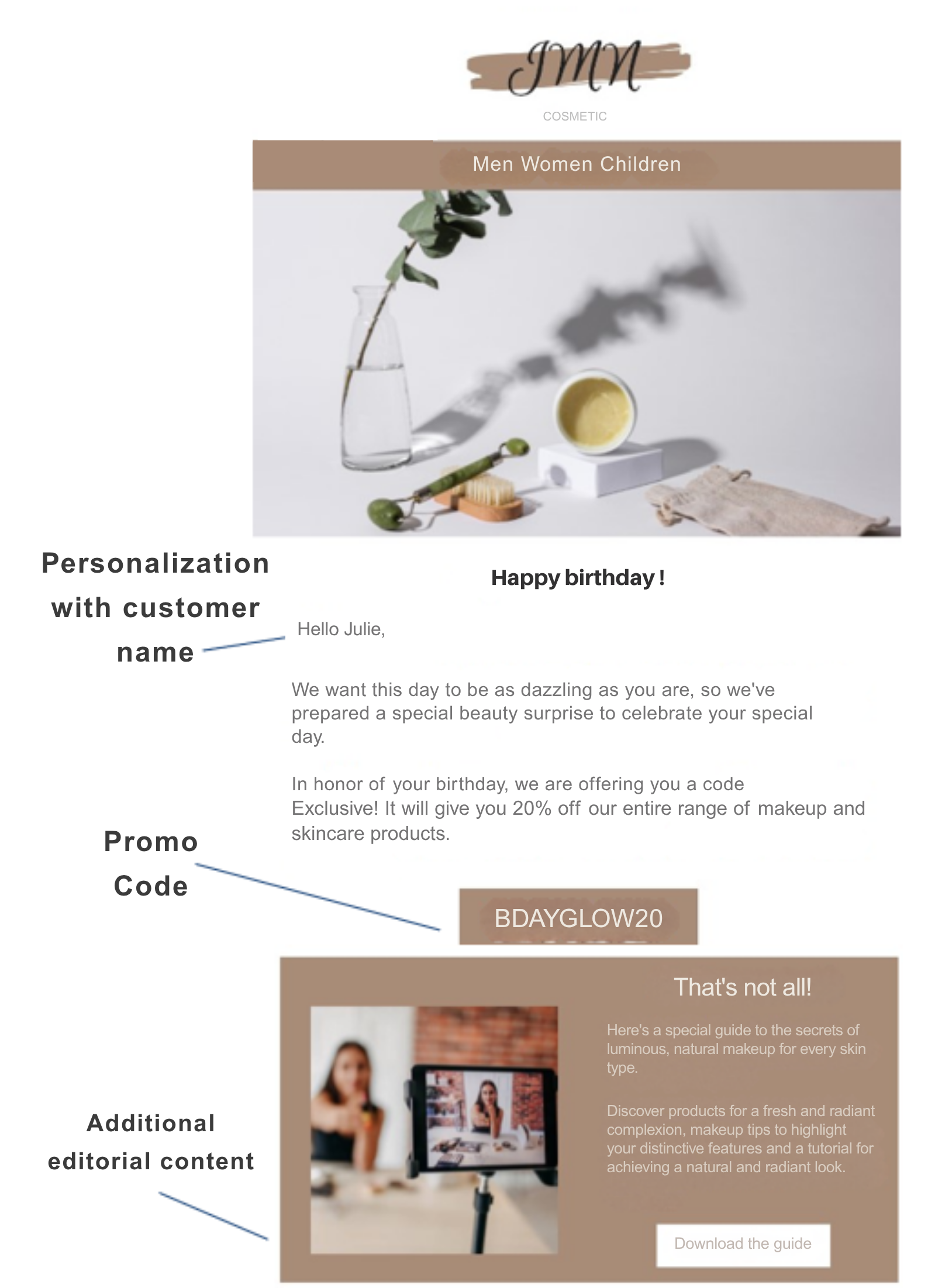
This scenario aims to build a stronger relationship with your customers by sending them special emails. A campaign is sent on their anniversary (register or first purchase in the site) or birthday, and in the case of birthdays, it is advisable to also send a campaign a few days beforehand.
It allows you to build customer loyalty by valuing them individually through personalised messages and offering them exclusive offers or a discount as a gift.
Best Practices:
- Although the main goal is to congratulate your customer, you can also encourage them to celebrate the occasion with a special purchase and suggest personalized recommendations.
- Offer a discount or special promotion.
- If you don’t have your contacts’ birthday dates, Probance can adapt this scenario by configuring a Registration Anniversary or First Purchase Anniversary instead.
- Take the opportunity to reinforce your brand identity by highlighting key points or values with some editorial content.
CONTACT REACTIVATION
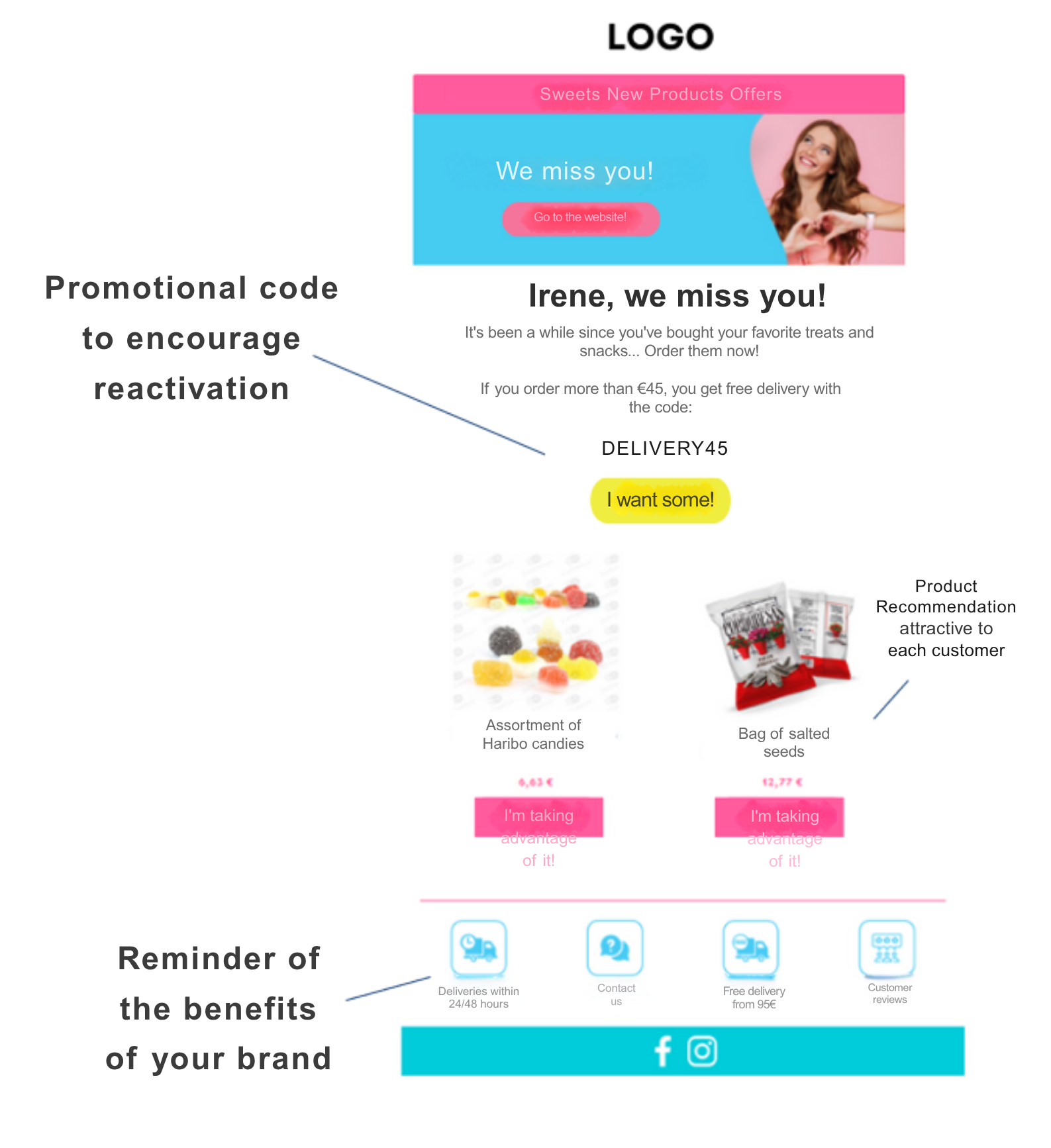
This scenario aims to reactivate contacts who have not interacted with the brand for some time and to prevent losing them. It is activated when a member enters the Inactive audience group: this group contains all members who have not placed an order, visited the website or clicked on any communications for at least 3 months.
The objective of this scenario is twofold: on the one hand, it allows you to reactivate the interest of inactive customers so that they interact with communications again, and on the other hand, it allows you to identify contacts that should be deactivated in order to maintain a high quality customer database.
Three campaigns are sent: Contact reactivation 1, the day after entering the inactive group, and Contact reactivation 2, seven days later. These two campaigns have the main objective of reactivating the customer, while the third, Contact reactivation 3, sent 30 days after entering the inactive group, aims to clean up the database, so no product recommendations are offered.
Best Practices:
- Remind your customers of the benefits they will lose if they decide to unsubscribe.
- Offer an attractive deal to encourage their return.
- Maintain a friendly and respectful tone.
WELCOME
This scenario aims to welcome your new contacts and introduce your brand, activating after the customer registers in the contact database. It could be a visitor who has just subscribed to the newsletters or a customer who has created an account when placing an order or on their own initiative.
This scenario allows you to initiate a relationship with each contact: it is an opportunity to thank them for their interest in the brand, highlight our identity and values, and present our catalogue, showcasing products of interest if a purchase has already been made or proposing a first-order offer to those who have not yet purchased.
Four onboarding campaigns are sent: Welcome 1, the day after registration, Welcome 2, 5 days after registration, Welcome 3, 10 days after registration, and Welcome 4, 20 days after registration.
Best Practices:
- Highlight your brand’s values and DNA, and introduce its universe.
- Encourage a first purchase with a welcome discount.
- Use personalized elements from the very first email to start building a personal connection.

Scenarios to attract and involve your customers
NEW PRODUCT ALERT
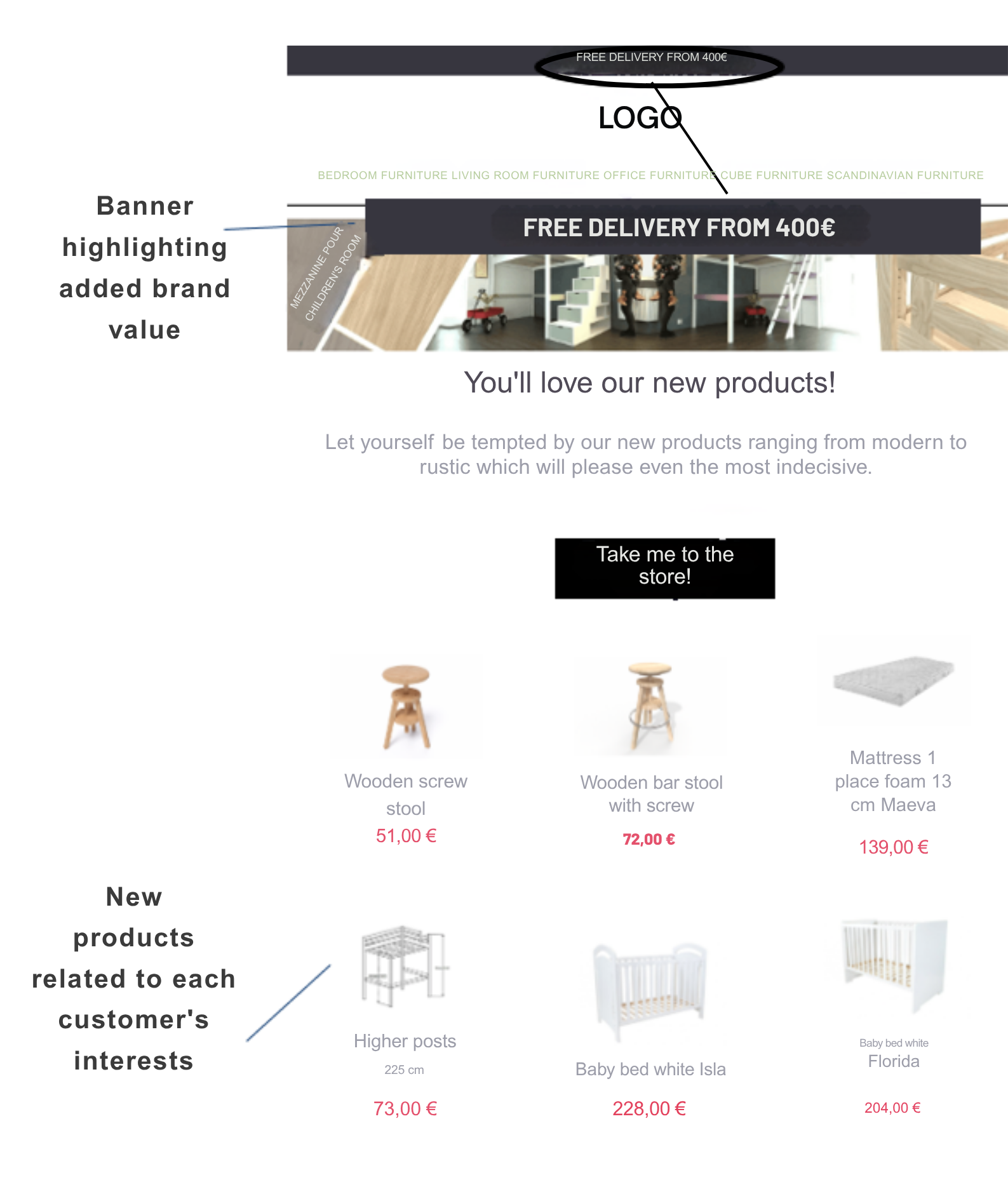
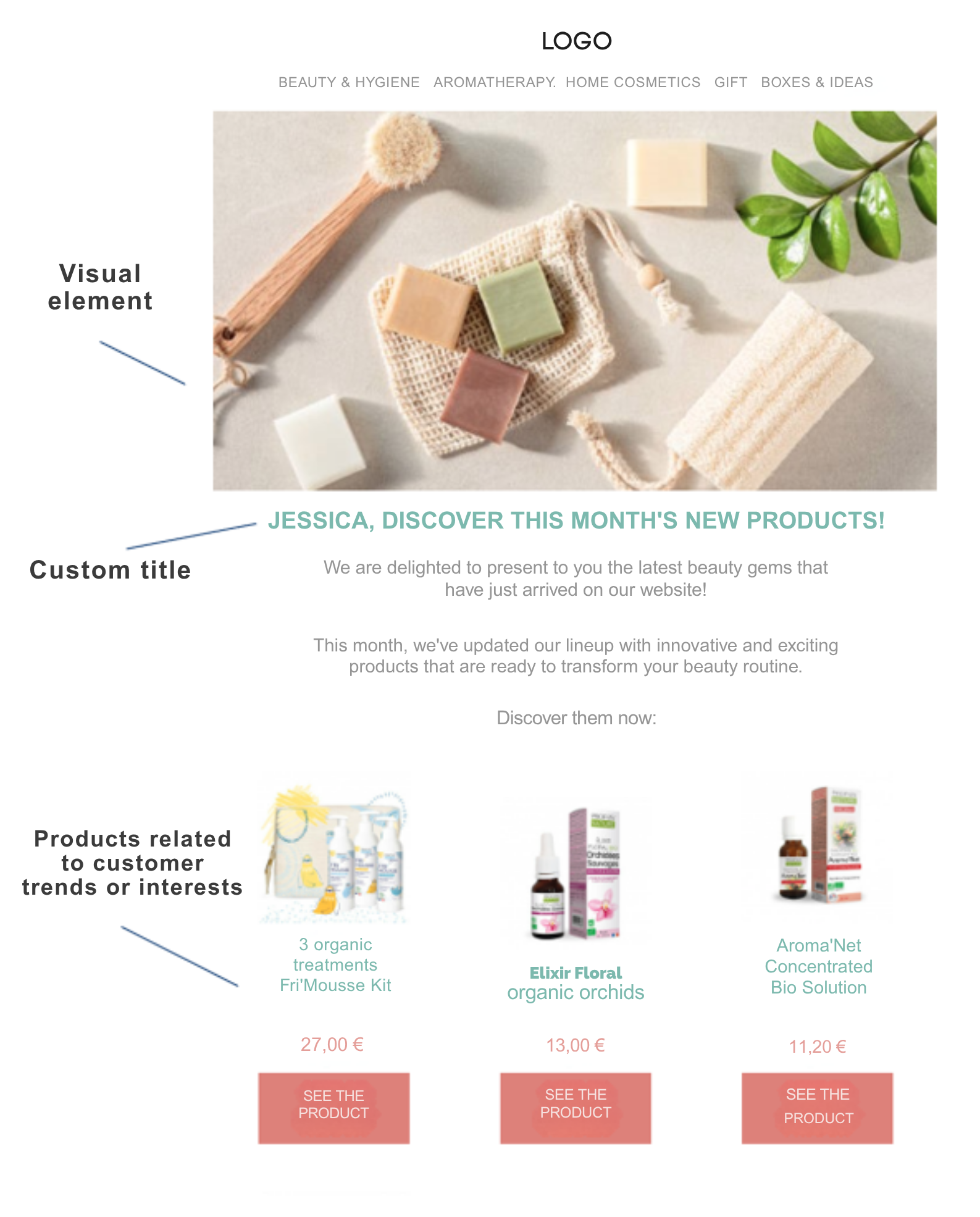
Probance detects new products added to the favorite or recently visited categories of each of your contacts, and automatically sends them a personalized selection to keep them informed—without the need to create manual newsletters and without sending the same email to everyone, featuring products that may not match their interests.
This scenario has two campaigns: a monthly one, which focuses on the visited categories by the customer, and a weekly one, which focuses on the customer’s favourite categories when shopping.
Best Practices:
- Use personalized tags related to the contact’s name or one of their products to clearly show that they are not receiving a generic email, but content tailored to their interests.
- You can also take advantage of these emails to add additional information you want to remind them of, such as an extra benefit of your brand, contact details, or categories you wish to highlight…
DISCOUNT ALERT
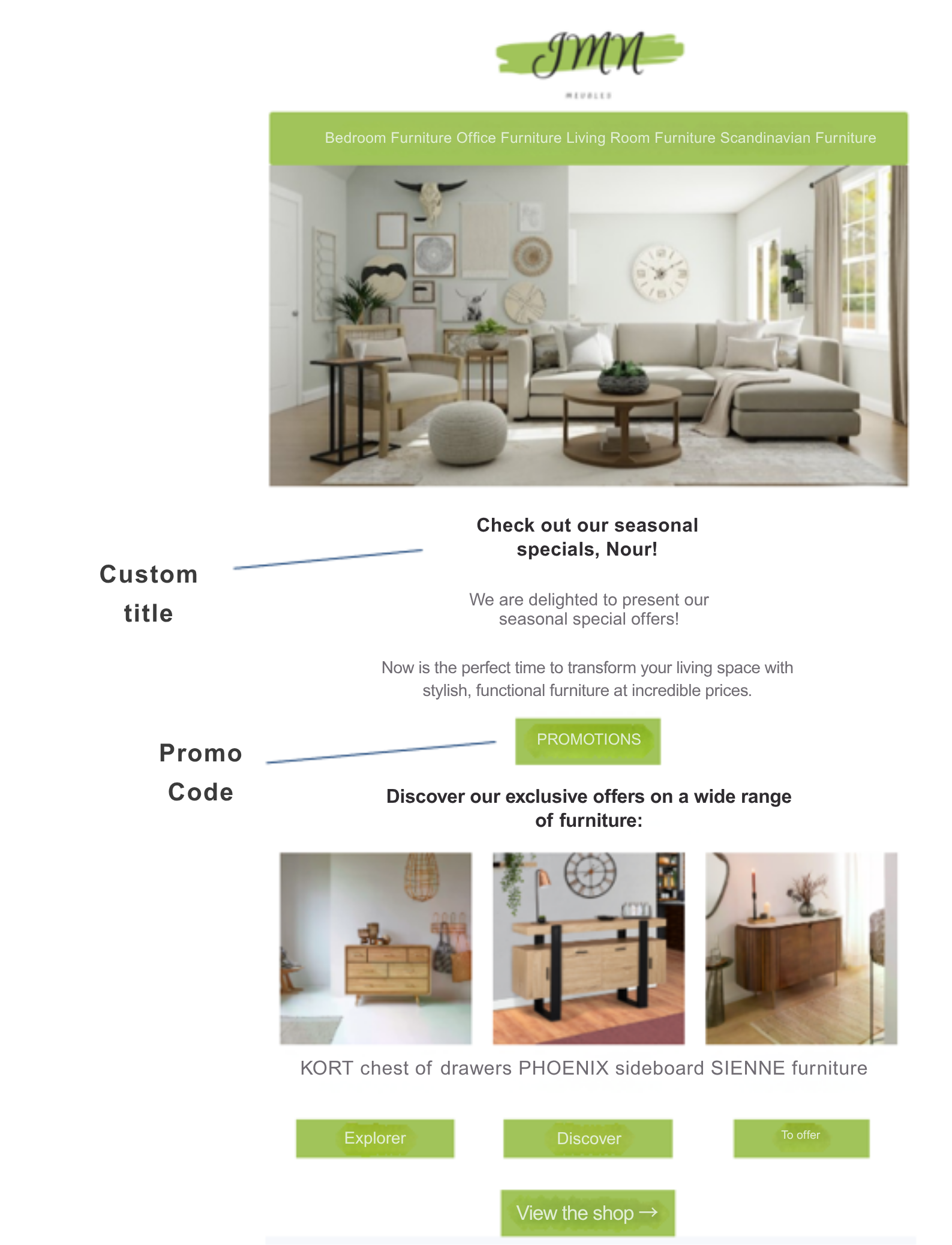
The discount scenario allows you to send regular alerts to inform your customers of price reductions on products they have shown interest in: Probance automatically detects the products that each of your contacts has shown interest in, and that are discounted, notifying them automatically.
This allows you to automate communications regarding price reductions in the catalogue, ensuring a personalised selection for each customer.
The scenario contains two campaigns: the first, Discount alert 1 on visited products, weekly, focusing on products visited by the customer, and the second, Discount alert 2 on abandoned products, monthly, focusing on products that the customer has added to their cart but has not purchased.
Best Practices:
- Ensure clarity and conciseness. Make it easy for your contact to see and clearly understand the promotion.
- Emphasize the limited-time nature of the discounts to increase the sense of urgency.
BACK IN STOCK ALERT
This scenario aims to recover a potential sale. To do this, it automatically notifies your customer that the products they were interested in in the last month, but were out of stock, are now available again. Every day, Probance automatically checks the product database and sends a campaign, Back in stock alert on visited products, to customers who meet the conditions.
Best Practices:
- Take the opportunity to add additional content you want to highlight.
- Strengthen the connection with your contacts by including personalized elements such as their name or the product they are interested in.

Scenario to effortlessly build customer loyalty
REGULAR NEWSLETTER
All of the scenarios discussed above are linked to specific triggers, but if you want to keep your customers informed on a regular basis, you can create automated newsletters.
These emails reinforce customer engagement, as customers will receive a newsletter on a regular basis, at a defined frequency (monthly, weekly or fortnightly) and automatically.
In addition, dynamic blocks will display different products for each contact and in each mailing, so that campaigns are not repetitive. This way, you can configure your newsletters to display trending products at the time of mailing, a summary of the latest promotions, and more, all tailored to each user’s behaviour.
Best Practices:
- Take the opportunity to regularly remind customers of the added benefits of your brand.
- Add extra elements you want to highlight on your site, such as important categories, additional services, or customer service contact details.
- Use eye-catching visuals, and if possible, dynamic elements (GIFs).
The only limit is the one you set!
With Probance, you will always be able to manage the needs and specificities of your brand.
In addition to the 11 scenarios we have presented and their variations, we offer you the possibility to create additional custom-designed and configured scenarios to achieve your goals.
A Wishlist campaign to send your contacts the products they have added to their wishlists or favorites? One to let them know they can purchase a gift card? Or perhaps one to introduce your loyalty program and reward your VIP customers? … And much more! It’s up to you to decide how far you want to go.
Contact your account manager to explore all the possibilities that Probance has to offer.